Theo Dimitrasopoulos
  • Home
  • Projects (current)
  • Other
  • Blog

Quant Projects

Derivatives pricing, portfolio construction, machine learning, and market microstructure — every project ships with reproducible code, honest benchmarks, and an interactive dashboard.
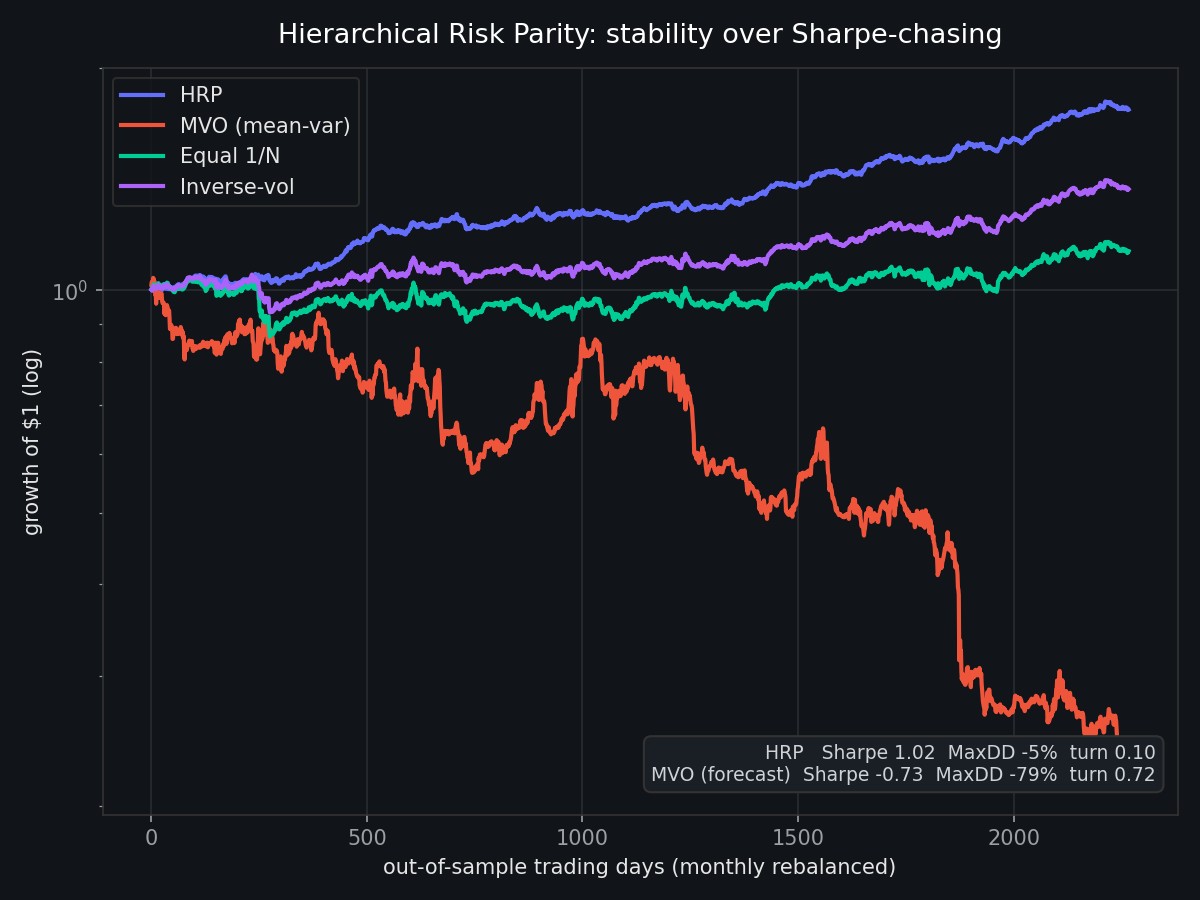
HRP versus benchmark cumulative return curves with the return-forecast MVO book collapsing

Hierarchical Risk Parity — Allocation Without Return Forecasts
Portfolio Construction — Hierarchical Risk Parity implemented from scratch on SciPy (correlation-distance clustering, quasi-diagonalisation, recursive-bisection risk allocation) and equipped with sample, EWMA, Ledoit-Wolf and a from-scratch DCC-GARCH covariance, benchmarked honestly over a 10-year monthly walk-forward against MVO, equal-weight and inverse-vol risk parity; HRP’s real edge is stability, not raw Sharpe — it beats 1/N (p=0.008) and utterly dominates return-forecast MVO (which blows up to a −79% drawdown) yet honestly ties minimum-variance MVO, and a momentum overlay only re-introduces the instability HRP was built to avoid.
beats 1/N · p=0.008

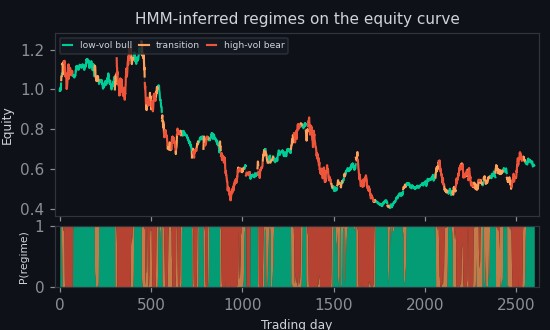
Regime-coloured equity curve overlaid with the causal HMM state-probability ribbon

Market Regime Detection & Regime-Conditional Factor Rotation
Regime Modelling — A 3-state Gaussian HMM (Baum-Welch from scratch) infers latent bull, bear and transition regimes from return and volatility; gradient-boosted alpha models trained per regime are blended by the causal posterior probability, with a Markov-switching VAR macro overlay, and a strict walk-forward backtest shows the regime rotation beats a single unconditional model out-of-sample (IC +0.102 vs +0.083, p=0.001) but pays for it in turnover — a real edge that erodes as trading costs rise.
IC +0.102 vs +0.083

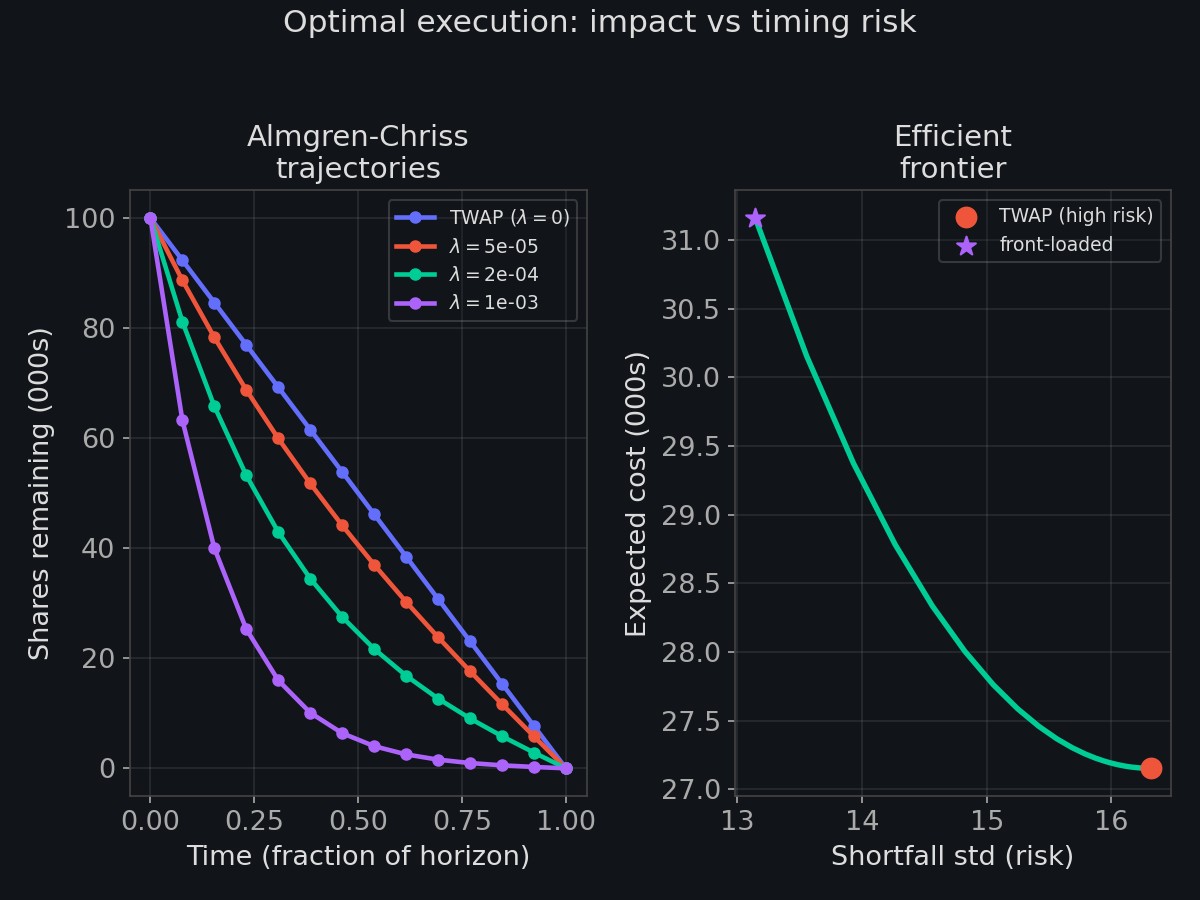
Almgren-Chriss liquidation trajectories and the efficient frontier of execution cost versus risk

Optimal Trade Execution — Almgren-Chriss and Reinforcement Learning
Market Microstructure — The Almgren-Chriss closed-form trajectory minimises expected implementation shortfall plus a risk-aversion-weighted variance, tracing an efficient frontier from TWAP-like liquidation to aggressive front-loading; market-impact parameters are calibrated from intraday data, and a PyTorch PPO agent trained in a gymnasium execution environment learns to deviate from the static schedule on intraday momentum and volume, outperforming AC, TWAP, and VWAP under non-stationary impact.
beats AC · TWAP · VWAP

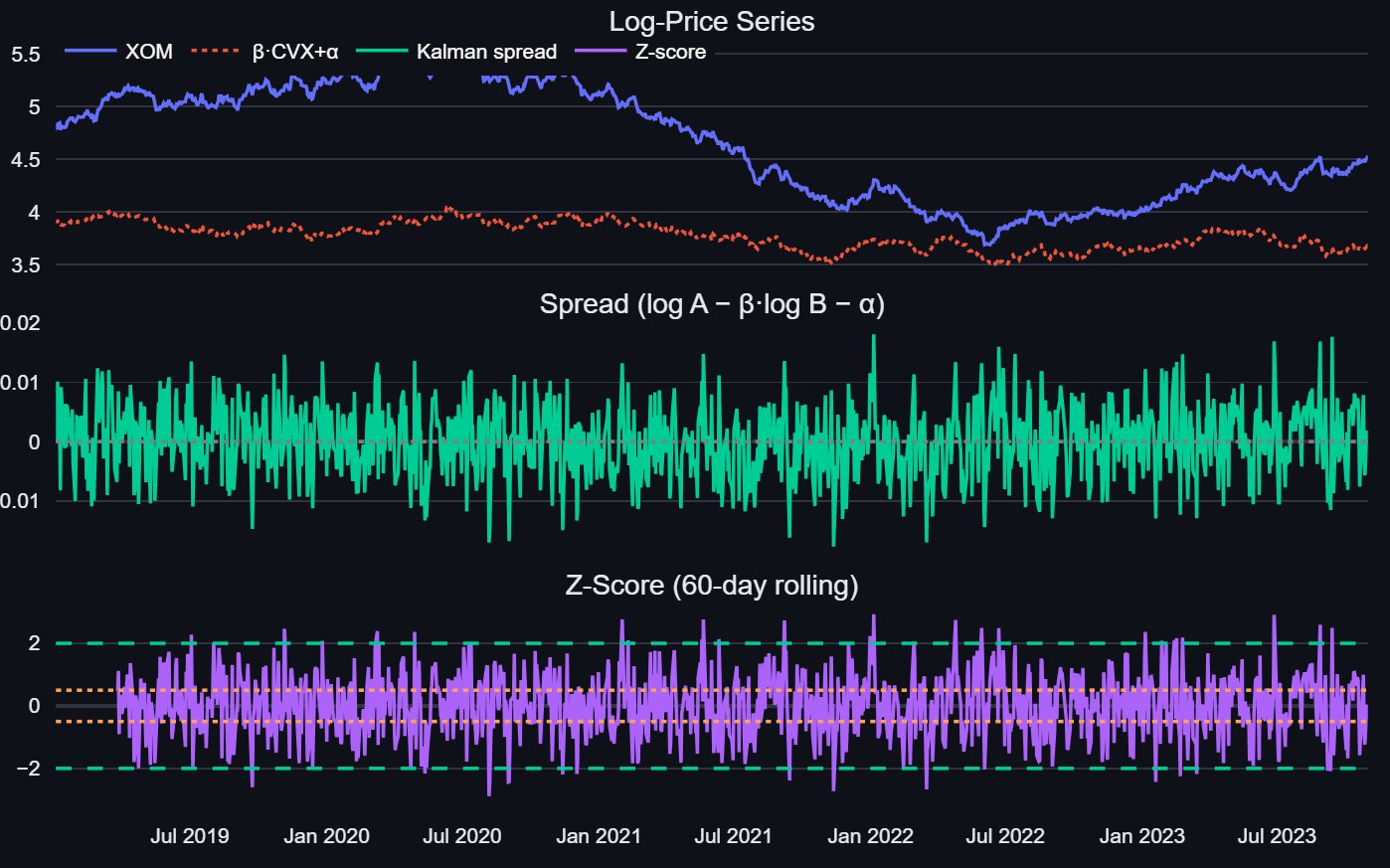
Pairs trading cointegration spread and equity curve

Statistical Arbitrage — Pairs Trading via Cointegration
Quantitative Trading — Engle-Granger and Johansen cointegration tests screen equity pairs for stationary spreads; an Ornstein-Uhlenbeck process quantifies mean-reversion speed and half-life; a Kalman filter replaces the static OLS hedge ratio with a dynamic estimate that adapts to structural drift; z-score signals drive a backtested long-short strategy with transaction costs.
Kalman dynamic β

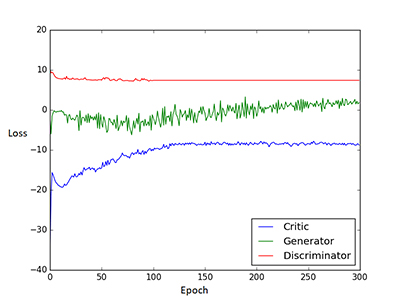
GAN scenario generation visualization

Scenario Generation using Generative Adversarial Networks
Risk Analytics — WGAN-GP trained on cross-asset log returns to learn the empirical joint distribution; benchmarked against historical simulation and parametric bootstrapping across tail diagnostics, correlation structure, GARCH persistence, PCA alignment, and portfolio VaR coverage. Developed with Bank of America Securities.
WGAN-GP · tail VaR

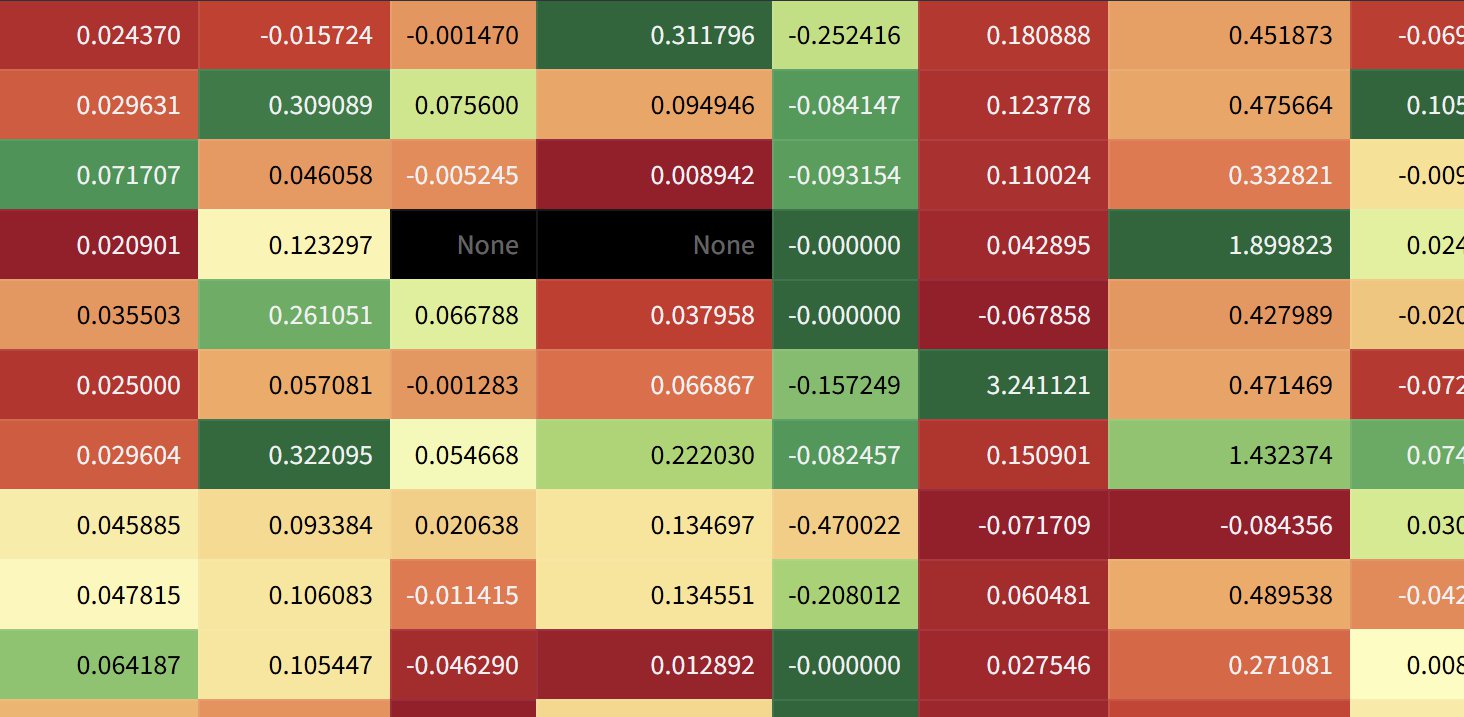
Cross-sectional factor signals IC heatmap and spread returns

Cross-Sectional Signals Engine
Factor Research — SEC EDGAR fundamentals combined with price data to engineer equity factor signals (value, quality, momentum, accruals), rank stocks into deciles, and evaluate IC and long-short spread performance with a Streamlit dashboard.
SEC EDGAR · decile IC

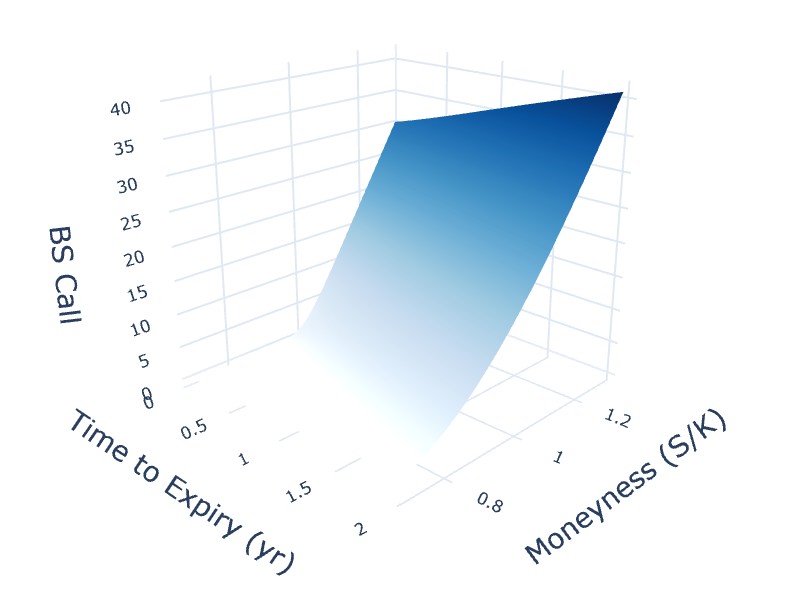
Options pricing surfaces and Greeks dashboard

Vanilla Options Pricing — Black-Scholes, Binomial Tree, and Greeks
Pricing & Hedging — Black-Scholes and CRR binomial tree from scratch, full Greeks set (delta, gamma, vega, theta, rho), pricing and Greek surfaces across moneyness and expiry, scenario P&L attribution, and an interactive Streamlit dashboard.
BS + CRR · full Greeks

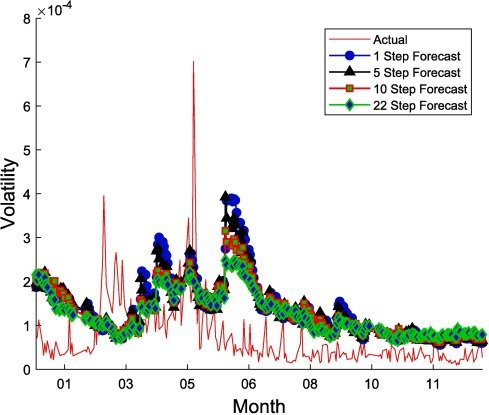
Conditional volatility and regime map chart

Conditional Volatility Forecasting
Time Series — Modelling and forecasting conditional volatility with EWMA and GARCH(1,1) benchmarked against rolling historical vol across multiple horizons, with a three-state regime detector and a Streamlit dashboard.
EWMA/GARCH · QLIKE

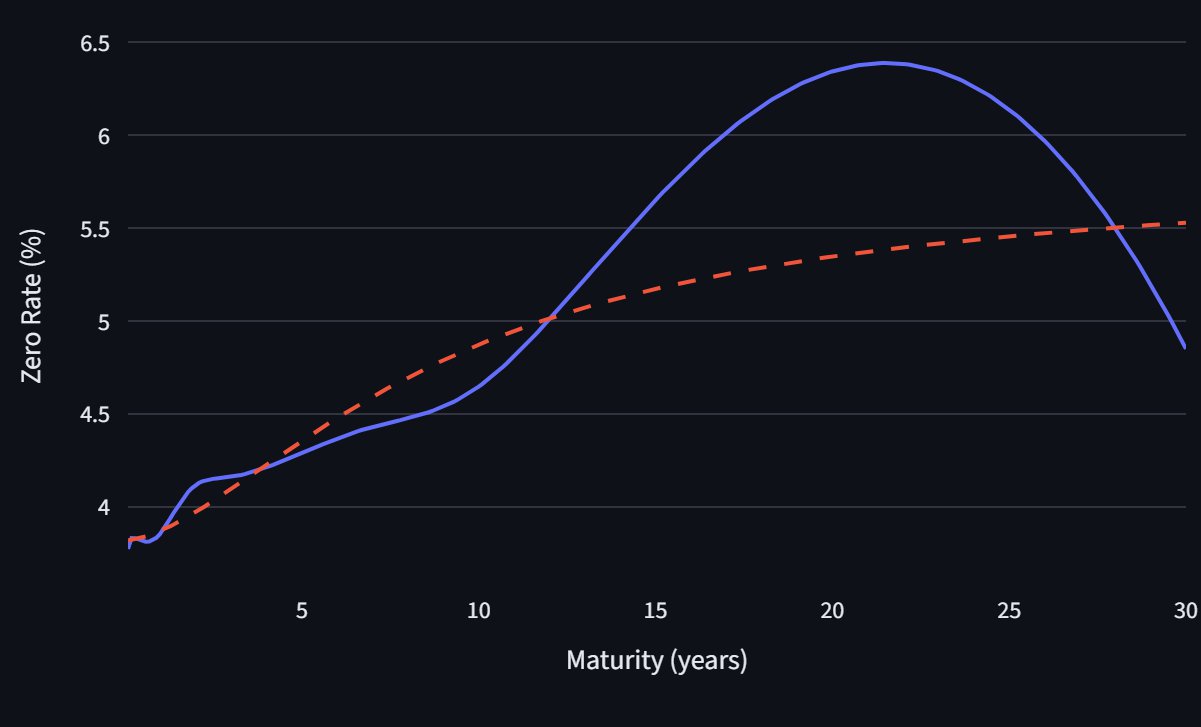
US Treasury yield curve bootstrap and shock scenarios dashboard

Yield Curve Explorer
Fixed Income — Bootstrap zero-coupon term structures from US Treasury CMT data, compare interpolation methods, fit Nelson-Siegel models, price fixed-rate bonds, and stress-test with rate shock scenarios using a Streamlit dashboard.
Nelson-Siegel fit

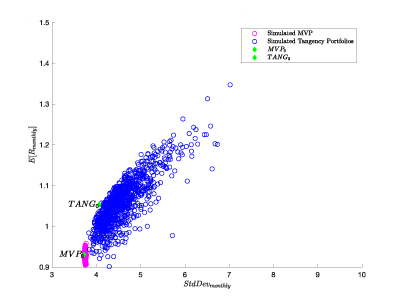
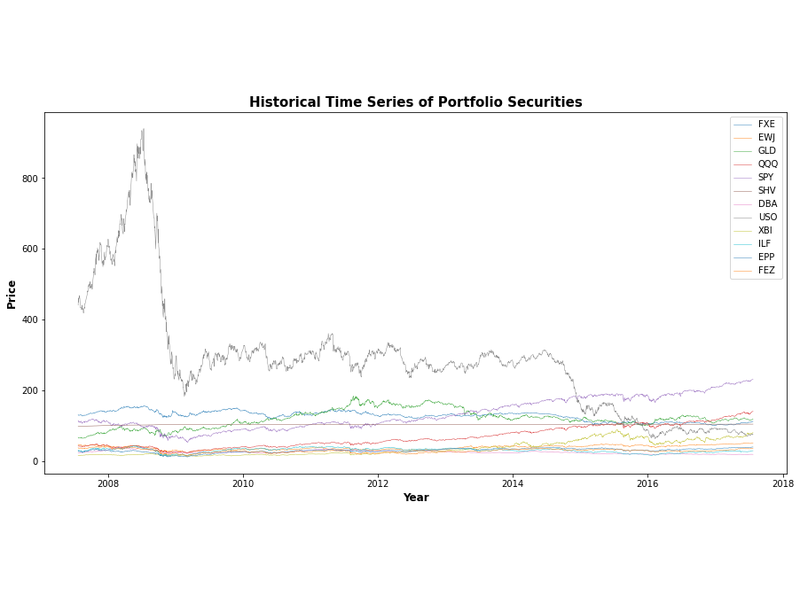
Efficient frontier portfolio chart

Mean-Variance Efficient Portfolios
Portfolio Optimization — Constructing and visualizing the efficient frontier using mean-variance optimization, with analysis of minimum variance and maximum Sharpe ratio portfolios.
min-var · max-Sharpe

Portfolio Risk Engine

Portfolio Risk Engine
Risk Analytics — A Python CLI computing rolling volatility, Value at Risk, CVaR, stress tests, Kupiec backtesting, and factor decomposition for multi-asset portfolios.
VaR · CVaR · Kupiec

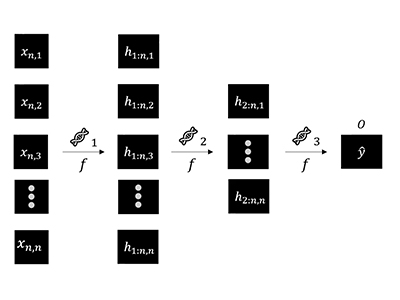
Evolutionary neural network training chart

Genetic Neural Networks
Machine Learning — Training neural networks with genetic algorithms to automate buy/sell/hold signals for portfolio management of the Dow Jones Industrial Index.
GA-trained signals

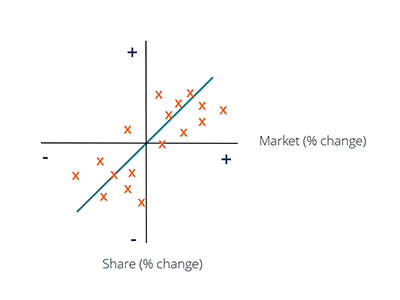
Global macro portfolio returns chart

Long/Short Global Macro Strategies
Portfolio Optimization — Backtesting systematic long/short portfolios across global macro factors including equities, rates, commodities, and currencies.
L/S factor backtest

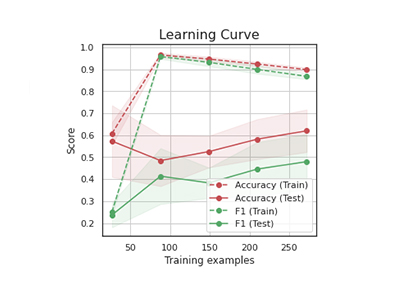
Federal Reserve NLP analysis

Predicting Interest Rates from Federal Reserve Documents
Machine Learning — Using NLP, topic modeling, and sentiment analysis on FOMC communications to forecast U.S. interest rate direction.
FOMC NLP signal

Asian options Monte Carlo simulation

Asian Options Monte Carlo Pricing
Pricing & Hedging — Monte Carlo simulation methods for pricing arithmetic and geometric Asian options, including variance reduction techniques.
MC · variance reduction

© 2026 Theo Dimitrasopoulos  ·  LinkedIn  ·  GitHub